
What a Salt Lake City Resident Lookup Covers
A Salt Lake City resident lookup is a set of narrow checks. The assessor asks whether a person is tied to a tax parcel. The Recorder asks what instrument or legal description was recorded. XChange asks whether a public Utah district or justice case matches. Vital Records asks whether an eligible event record can be released. DOPL or business searches identify a licensee or filing role. Directories, newspapers, cemeteries, jail, UDC, and registry tools add time-specific or status context.
| Record | What It Confirms | Where to Search | Access |
|---|---|---|---|
| Assessor parcel | Tax owner, situs, parcel context | Salt Lake County Assessor | Public query |
| Voter status | Registration and polling context | County Elections | Privacy and purpose rules |
| Court index | Case, party, hearing, judgment | Utah Courts XChange | Public-only, remote fees |
| Vital record | Eligible marriage, death, birth event | Utah Vital Records | Release periods and proof |
| License or entity | Licensee, principal, agent, or status | DOPL / Utah Commerce | Public scope varies |
Use an address first when the clue is a parcel. Use XChange first when the clue is a public case. Use the Salt Lake City historical collections, newspapers, or the City Cemetery for a historical person. Use Vital Records only when the event, relationship, and release rule fit. A negative result can mean a closed record, a coverage gap, an old name, or a different custodian.
The Utah Courts XChange search screen is a useful statewide starting point for a public court question.
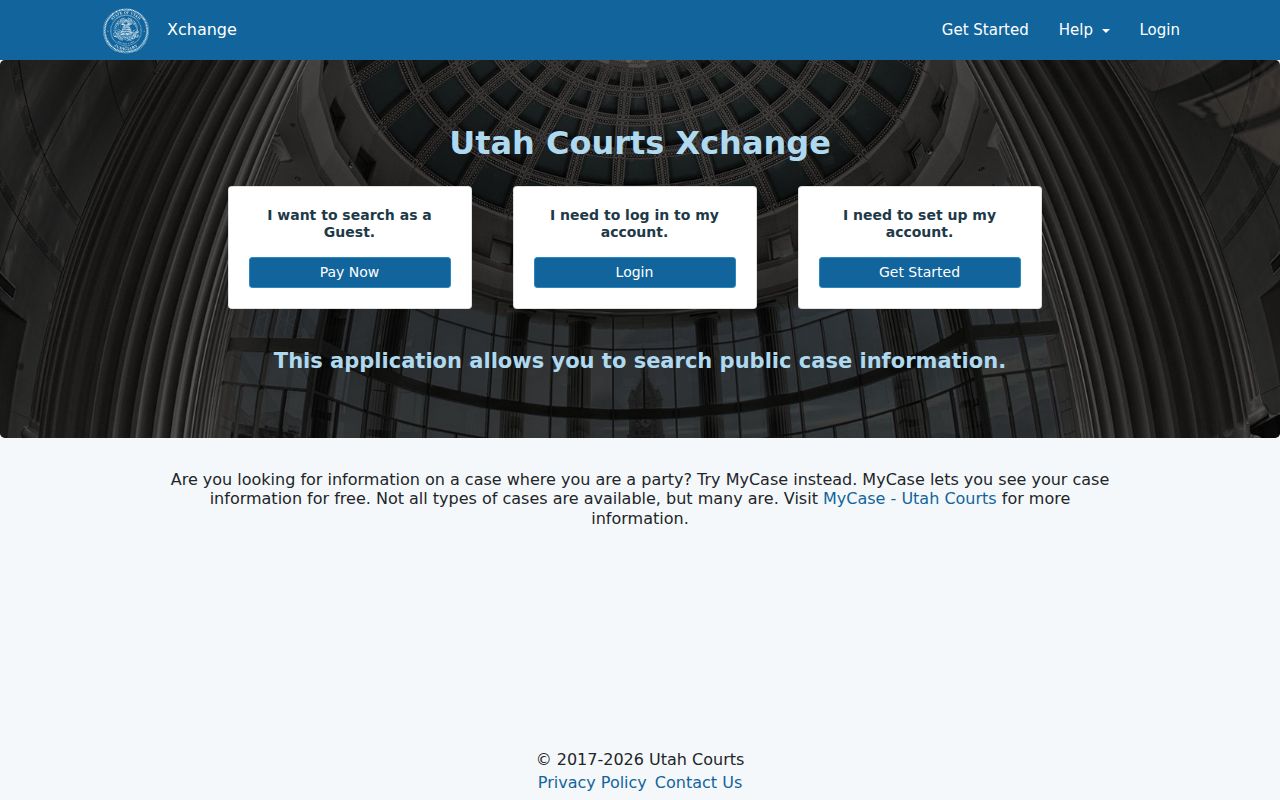
Remote access and public courthouse terminals are different routes, and public case visibility does not mean every document is open.
Normalize a Salt Lake City Name Match
Common names need more than a single hit. Record middle initials, spelling variants, known ZIP or address, time window, occupation, and the source question. The assessor accepts a last-name-first format and at least three owner-name letters. XChange uses exact matching with wildcard guidance and can narrow by county, court, case type, and dates. A directory may use initials, honorifics, widow markers, “res,” and “bds.” DOPL can narrow a name by profession, while a business search separates an entity from its principal or agent.
Do not copy a full sensitive identifier into research notes. Compare safe markers such as address, role, date, court, or business association. If two sources disagree, preserve both results and ask the custodian rather than blending them into a new identity.
Use XChange's Salt Lake City Search Fields
Utah Courts XChange covers district and justice cases. Its search can use jurisdiction, search type, case number, last and first name, case type, statewide or local scope, birth date when present, citation number, citation location, and filing or disposition date panels. A result can display county, court, case type, number, filing date, names, party code, case history, hearings, judgments, public documents, and an address when filed. An extended criminal result can add charge, plea, disposition, judge, attorney, citation, and proceeding fields.
| Best narrowing keys | County or court, case type, date range, full name, or case number |
|---|---|
| Wildcard | An asterisk can widen a partial first or last name search |
| Result ceiling | The page can return up to 500 results |
| Not shown | Sealed, expunged, juvenile, adoption, and specified confidential records |
The public index is not the same as a document image. Remote searches and documents have fees, while free public terminals are available at many courthouses and the Utah State Law Library. Add a second source before assigning a case to a Salt Lake City person.
The court result screen includes case and party fields described in the XChange search help.
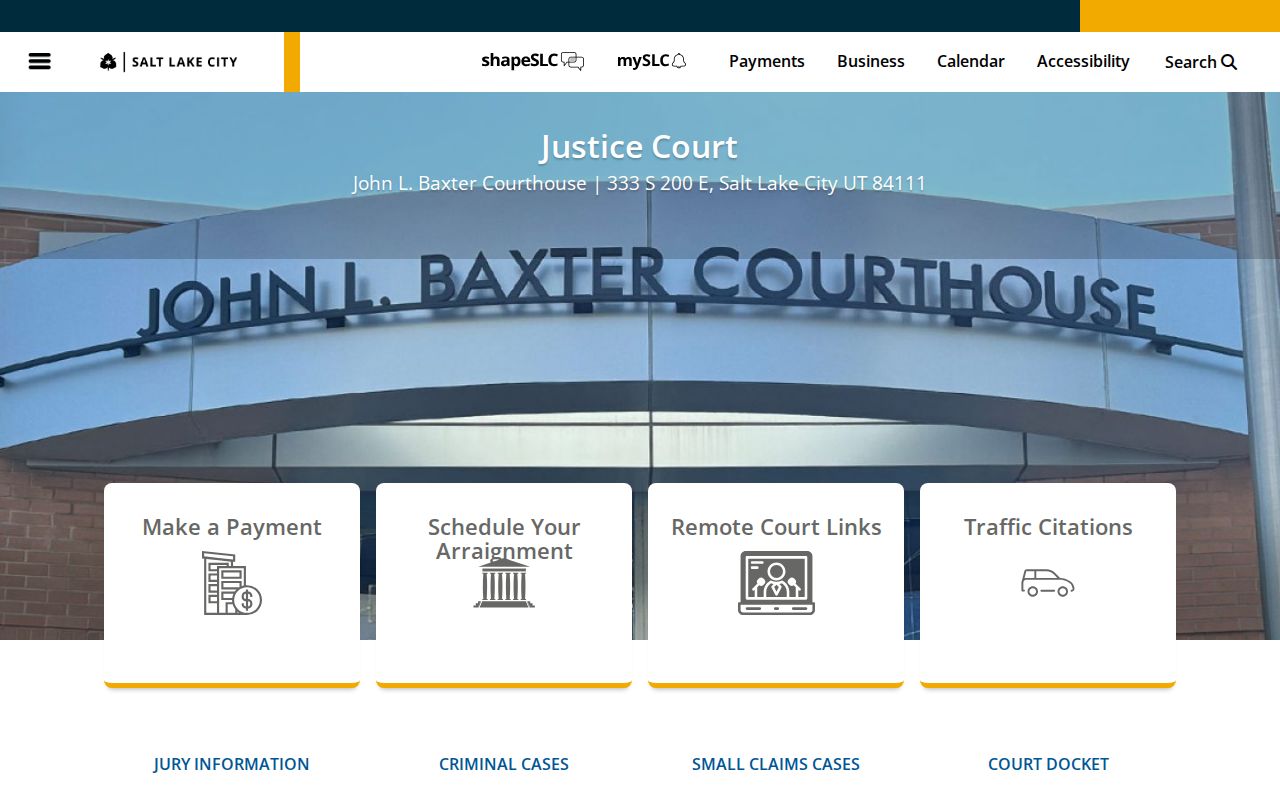
The Salt Lake City Justice Court calendar is date-based and complements, rather than replaces, the statewide index.
Request a Missing Resident Record
When a Salt Lake City resident lookup reaches a closed portal or missing index, use the custodian's counter, phone, email, written form, or Archives route before filing GRAMA. Utah's Government Records Access and Management Act requires a written request that identifies the records sought. It does not make an office answer a broad question or create a new investigation. Name the office, person or parcel, record type, and date window with enough detail to find the record.
The State Archives FAQ describes a general 10-business-day response target and a five-business-day target for an expedited public-benefit request. Inspection is free, while copies, staff time, media, or certification can cost money. Salt Lake County's page notes that the first 30 minutes of staff time are free, with actual-cost guidance after that. Archives access is the historical fallback, and its current notice asks for appointments and allows up to 15 business days during high volume.
Verifying a Salt Lake City Resident's Records
Verification works best as a short chain. Anchor a name to a parcel or other safe address clue, narrow the court search, then use an eligible vital or historical record only when its rules allow access. A marriage or divorce form asks for both spouse names, place, date, relationship, requester details, copies, signature, and fee. Salt Lake City-area requests can use Salt Lake County Vital Records in person, by mail, or through SILVER, with identification and relationship proof for ordinary orders.
- Write the name, safe address clue, ZIP, time window, and exact question.
- Check the Assessor or an appropriate historical index, then note the source date and role.
- Run XChange with county, court, type, date, and name variants as needed.
- Compare a second custodian, such as a directory, newspaper, license, cemetery, or eligible vital record.
- Request a certified copy from the office only when the release rule and proof requirements fit.
- Docket
- A court's running case record showing filings, events, hearings, and outcomes.
- Index vs image
- An index helps find a case or record; an image is the underlying scanned document when public.
- Certified copy
- A custodian-issued copy marked as an official reproduction, often with a separate fee.
The Utah marriage and divorce request form shows the event and eligibility fields an applicant must complete.
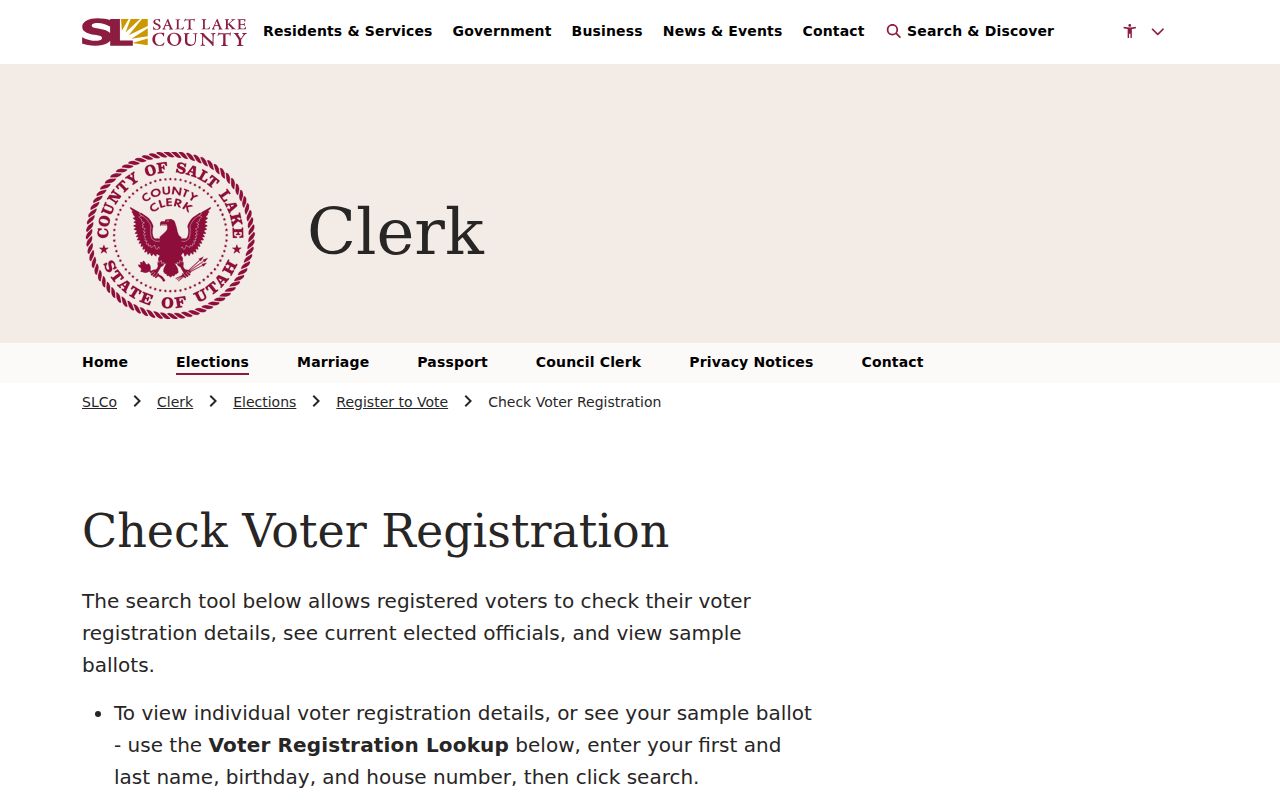
Birthday and house-number controls help narrow an individual voter-status request, but the result remains a registration record.
Separate Vital, Custody, and License Results
Utah vital records have public periods of 100 years for births, 50 for deaths, and 75 for other vital events under §26B-8-110. The County Archives historical indexes can bridge older birth, death, and marriage material. A current county jail search, Utah Department of Corrections name or UDC-ID search, and the Attorney General offender registry are status tools with different scope. VINE adds free anonymous notifications, but it warns that the service should not be the sole safety source.
DOPL Licensee Lookup searches by name and profession or by license number. Salt Lake City business questions can use Utah Commerce entity searches to identify a business, registered principal, or agent. Those records establish a filing or professional role, not a person's home address or present activity. Keep the record type in the result label.
The Utah DOPL Licensee Lookup is the official route for a professional-license question.
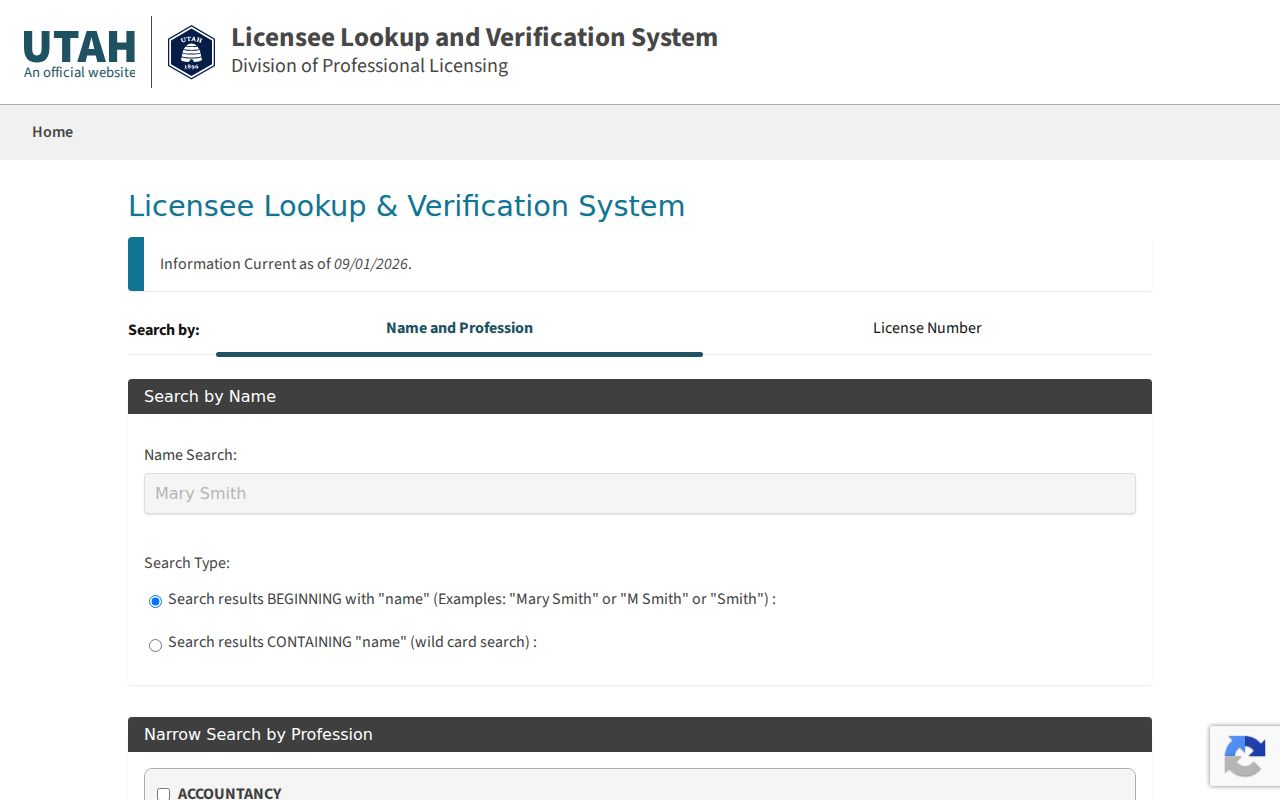
The license search can support role verification, but it should not be used to infer a personal residence.
Corroborate a Salt Lake City Match
Historical Salt Lake City sources often solve the same-name problem in a different way. A Polk or Crofutt entry can show occupation, residence, boarding, a widow marker, or a separate business address. Utah Digital Newspapers can add an obituary, move, court notice, or community event. Salt Lake City Cemetery supplies a name search and burial context. None alone proves that the person lived at the address on a later date.
Use the source that matches the time period, then check a different custodian. A directory listing paired with a tax card is stronger than two OCR snippets from the same volume. A court party paired with an address filed in the case may still need a parcel or newspaper check. Write “directory-listed resident,” “court party,” “assessor owner,” or “interment record” rather than the broad label “current resident.”
The Salt Lake County Sheriff corrections route is separate from general resident records.
The static county page does not expose a verified roster field inventory, so a negative result should not be treated as conclusive.
Legal Limits on a Resident Lookup
Utah privacy rules shape every Salt Lake City resident lookup. Safe at Home gives qualifying survivors a substitute address and restricts the actual location. Voter At-Risk protection is separate and can omit or anonymize eligible records. Vital records have release periods and direct, tangible, legitimate-interest rules. Courts exclude sealed, expunged, juvenile, adoption, and specified confidential family records. Motor-vehicle personal information is restricted by the DPPA. If a public record is wrong, take the source date and query to the custodian for correction or clarification.
Lawful use. A Salt Lake City resident lookup is suited to family history, reconnecting, estate research, and ordinary civic questions. Utah stalking law covers repeated monitoring, observing, approaching, or contacting a person, so a public result never authorizes harassment, intimidation, or publication of a protected address.