
Sources for Previous Residents of a Salt Lake City Address
Previous residents of a Salt Lake City address appear in different time layers. Start with the modern situs address and parcel, bridge any old tax serial, then work backward through the Recorder, Archives, directories, and newspapers. The table shows what each source can contribute without turning one record into a complete household claim.
| Source | Years It Covers | Where Held | What It Shows |
|---|---|---|---|
| Recorder instruments | Current scope; older material through Archives and books | Salt Lake County Recorder | Recorded parties and land interests |
| Tax rolls and ledgers | 1853–2021 material; older series arranged by year and property | Salt Lake County Archives | Owner or taxpayer, legal description, values |
| Appraisal cards and photos | 1934–1987 cards; bulk 1936 through the 1970s | County Archives | Footprint, rooms, additions, owner clues |
| Polk and Crofutt directories | 1885–86, 1890s, 1902, 1919, selected years to 1989–90 | Library and University of Utah | Listed occupants, occupations, addresses |
| Permits, maps, newspapers | Historic and current sets vary by custodian | SLC, Archives, library collections | Physical change and life-event context |
Use the Recorder for title, Archives for property history, directories for listed occupants, and newspapers or cemetery records for life events. If the Salt Lake City address is current, start with parcel and legal description. If it is historic, preserve the old street wording before trying a modern search.
The Salt Lake County house-history route explains the address-based appraisal-card search.
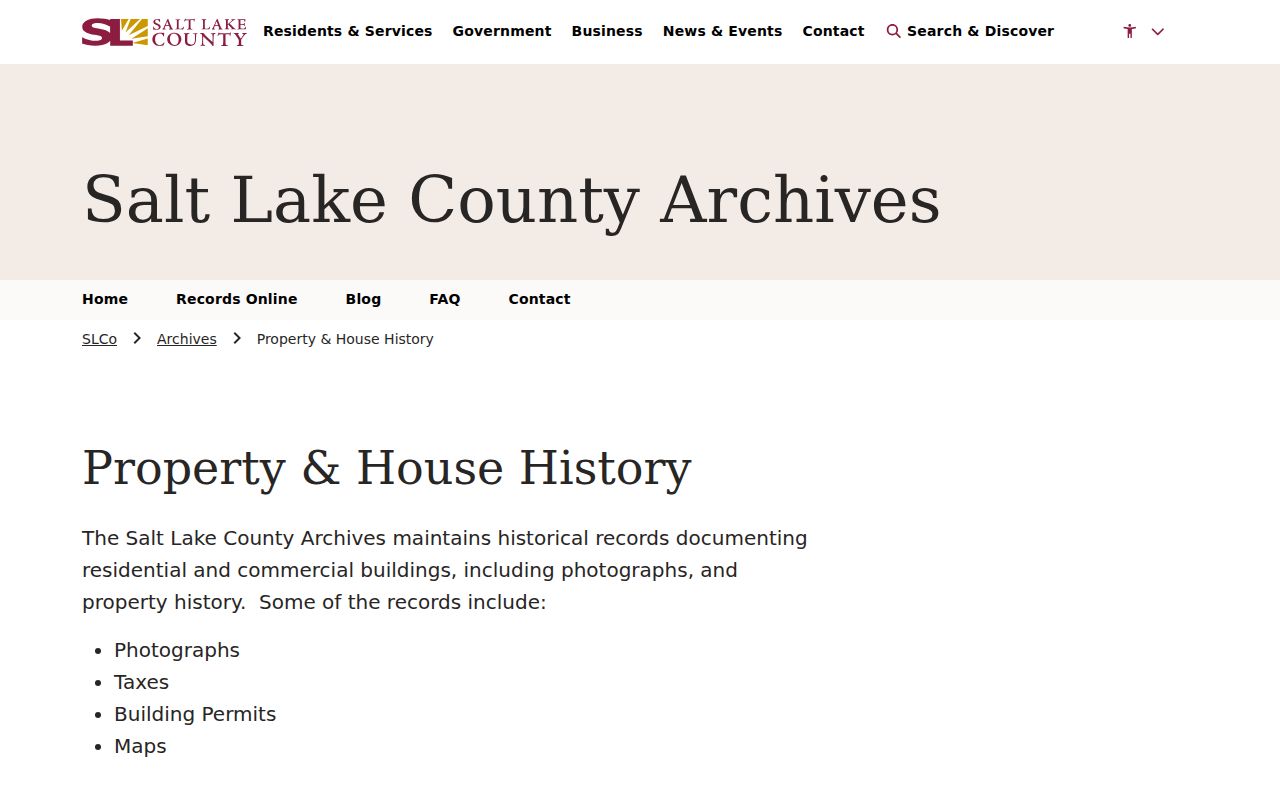
House-history cards are searched by property address, not by the name of a previous resident.
Bridge Old Salt Lake City Parcel Serials
County Archives appraisal cards and photos do not use the same key in every era. Cards were arranged by old tax serial before 1984, while photographs use the current tax parcel and may be physically separate. The Archives page described 1970s–1991 card digitization as incomplete during the research pass. A missing scan may be a work-in-progress, not proof that the card never existed.
Write down the modern parcel, historic serial, situs address, legal description, and any year or plat clue. Ask Archives or the Assessor to bridge the numbers. This small step prevents a card for a nearby parcel from being attached to the wrong Salt Lake City house.
Tracing Past Owners Through the Salt Lake County Deed Chain
Start with the current Assessor card and its legal description, then open the Recorder's public property search by address or parcel. Data Services describes parcel-number history, owner of record, legal descriptions, recorded documents, tract index, subdivision maps, and chain-of-title clues. The public search may be at least 24 hours old, and a title search may still be necessary.
- Copy the current parcel, situs address, legal description, and linked document numbers.
- Open the current purchase instrument and record parties, date, type, and book, page, or document number.
- Search the prior grantor or grantee with the legal-description and parcel clues.
- Repeat backward, checking plat, tax serial, and address changes at each step.
- Use Archives, older deed books, or a paid copy request when the online path ends.
- Grantor / grantee
- The grantor transfers or grants an interest; the grantee receives it.
- Chain of title
- The linked sequence of recorded transfers and interests tied to land.
- Legal description
- The lot, block, plat, or other land wording that can remain useful when a street label changes.
The Recorder Data Services page describes the deeper chain-of-title and parcel-history route.
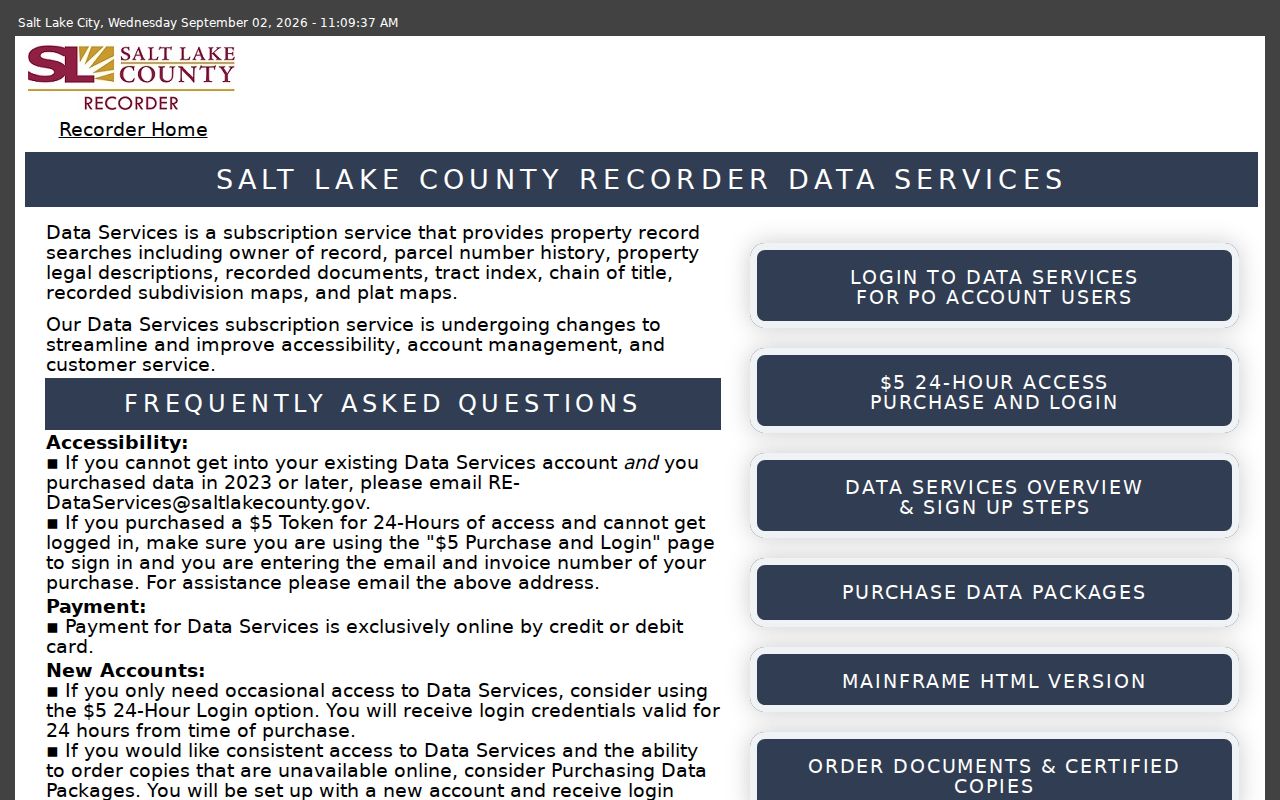
Follow the legal description and parties together; a street name by itself is too weak for an old deed chain.
Read Salt Lake County Tax History
Archives tax assessment rolls cover 1853–2021 material, with 1853–1870 online according to the research. Rolls from 1853–1949 can show owner name and address, legal description, real and improvement values, personal property, and taxes. From 1893 onward, arrangement uses legal description, plat, and block patterns. Tax ledgers from 1950–2010 show parcel or serial, owner address, property location, values, and payments by year and serial.
Tax records identify an owner or taxpayer, not necessarily a person living at the house. Use a tax card beside a directory entry, newspaper, or census source. The combination can explain a change while keeping the record roles honest.
The Archives records-online catalog is the historical access path for tax, land, map, and permit material.
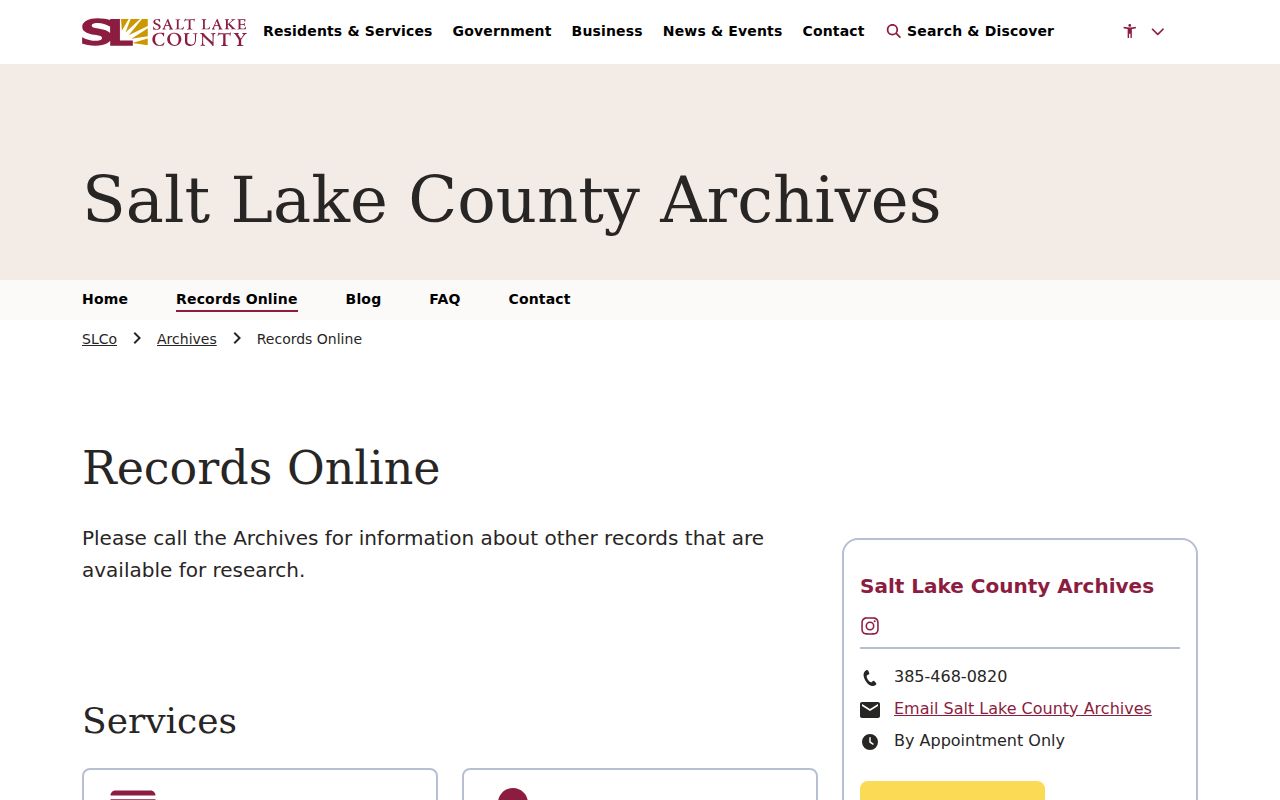
The catalog helps separate a historical tax source from the current parcel card.
Date House Changes With Local Maps
Appraisal cards from 1934–1987 can show stories, rooms, additions, garages, footprint drawings, year built, depreciation, and appraisal dates. Permit application cards from 1948–1969 can name an architect, designer, contractor, original owner, legal description, and project description. Aerials include 1952, 1958, 1964, 1979, and 1990/current sets. Sanborn maps add building use, materials, stories, footprint, lot, and street context.
These sources tell when a structure changed. They do not tell who occupied it. Pair a physical date with the directory and newspaper interval that surrounds it. If the property is incorporated Salt Lake City land, use the city's permit route; county files cover other jurisdictions.
The historic property digitization project describes ongoing work to make paper property records searchable.
Digitization is ongoing, so record the date of the search and ask Archives about a missing serial or card.
Keep Old Salt Lake City Numbers
The city grid is part of the address evidence. Salt Lake City code points to an official street map filed December 3, 1920, while older code language describes numbering aligned with county addressing. A directory may use First South, South Temple, Fifth East, or Second West. Preserve the exact phrase and compare it with a plat, Sanborn map, tax serial, and directory reverse pages.
Do not assume a failed modern geocode means the prior residents cannot be found. The old number may need a map or ordinance bridge, and the 1919 directory may cover the wider valley. Resolve scope before linking a listing to a Salt Lake City parcel.
For each previous-resident entry, preserve the edition, page, street wording, and city or suburb named by the source. A listed address can belong to Salt Lake City, Murray, Midvale, Sandy, Garfield, or another wider-valley place in the 1919 coverage. Compare the listing with the parcel's legal description and the city map before carrying a name forward. If the record says “res same,” treat that as a directory notation for that edition, not as proof that the person stayed there afterward.
Close a Past Resident Trail
When a directory listing ends, search Utah Digital Newspapers by the exact name, old street spelling, business, or a date window. A death notice or obituary can add relatives, former addresses, a cemetery, and community ties. Read the page image because OCR can misread initials and street directions. Salt Lake City City Cemetery adds a name search and map, but an interment record is not proof of residence.
Probate, eligible vital records, and recorded land documents can close a family or ownership question. Keep the conclusion modest: “listed at this address in the directory,” “named as a party in the instrument,” or “interred at the cemetery.” That wording distinguishes previous residents from owners, taxpayers, and event subjects.
Past Households: Directories, Census, and Obituaries
Owners are only one layer of previous residents. Polk and Crofutt city directories can show a listed person, business address, residence, boarder, widow marker, or “res same” notation. Pair a directory edition with census or HeritageQuest, then check Utah Digital Newspapers for an obituary, move, announcement, or court notice. The collection details belong on the Salt Lake City city directory page.
Salt Lake City City Cemetery provides a name search and map. A burial can support a death timeline, but it does not prove residence at the death date. Probate, vital, newspaper, and land sources should carry the conclusion together.
The County Archives historical index shows how older name, parent, and date searches can add a second source.
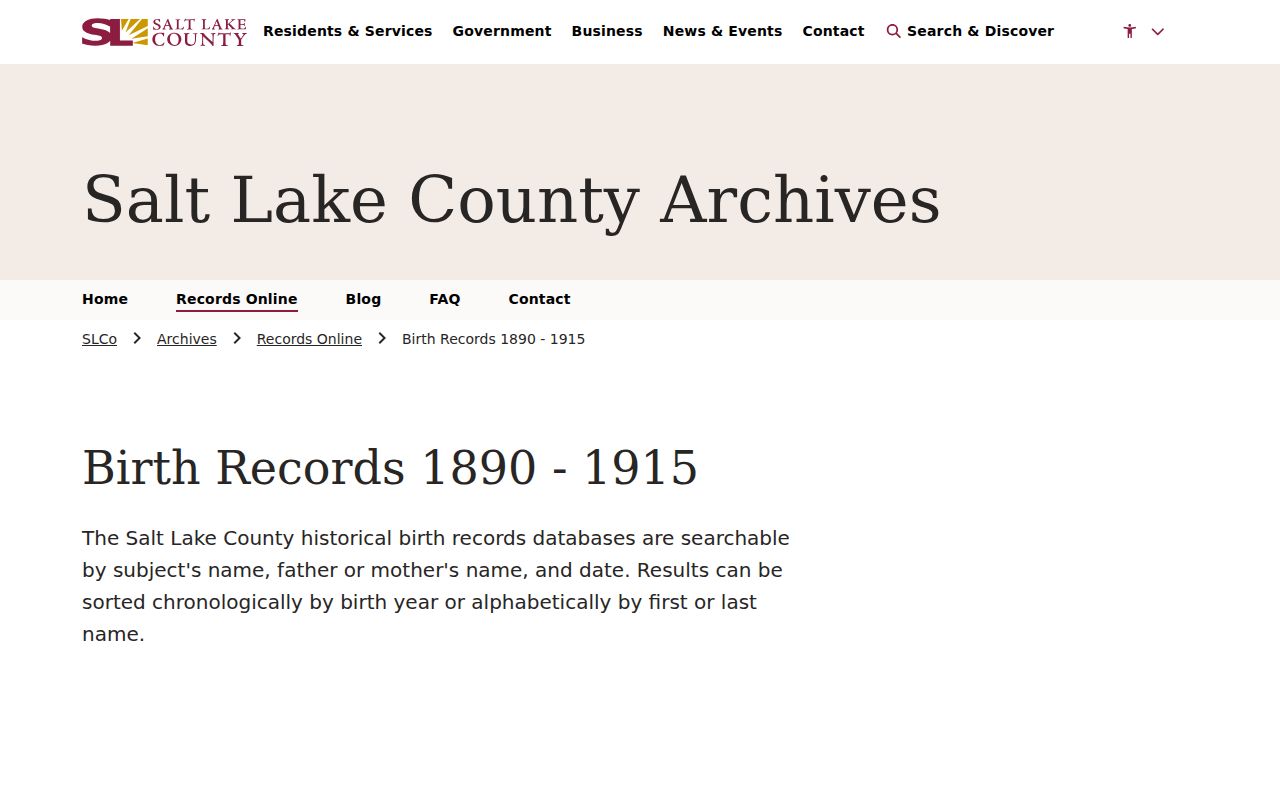
Historical index images help distinguish a family event from an address-only directory match.
When the trail is incomplete, write the gap plainly. The Recorder's exact online historic cutoff was not established in the research, some appraisal-card digitization remains in progress, and directory coverage is selective. A missing year should lead to a library, Archives, or custodian question, not a guessed occupant.
Recorder copies and Archives research may require payment, an appointment, or a wait. The Recorder handles known document requests in order, while Archives currently warns about high volume and asks researchers to allow up to 15 business days. Save the parcel and serial clues before making either request.
Lawful use. Previous-resident research in Salt Lake City is appropriate for house history, genealogy, estate work, and personal curiosity. A historical address record does not authorize surveillance, contact, harassment, or tracking of a living person.